
Now Reading: US–EU Tariff Tensions: A Deep Analysis of the New Transatlantic Trade Reality
-
01
US–EU Tariff Tensions: A Deep Analysis of the New Transatlantic Trade Reality

Introduction: A Trade Relationship at a Crossroads
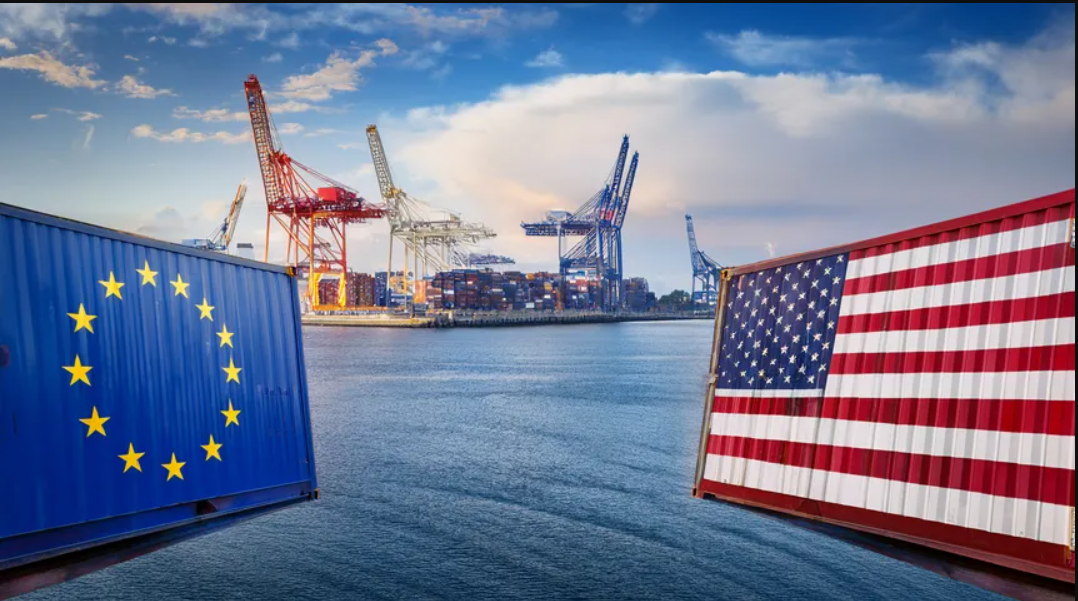
The economic relationship between the United States and the European Union has long been considered one of the most stable and influential pillars of the global trading system. Together, the two economies account for a significant share of global GDP, foreign direct investment, and cross-border trade in both goods and services. For decades, despite recurring disputes, the transatlantic partnership was defined by a shared commitment to open markets, predictable rules, and multilateral cooperation.
However, in recent years, this relationship has undergone a profound transformation. Tariffs—once regarded as outdated instruments in advanced economies—have returned to the center of policy debates. The reintroduction and expansion of tariff measures by the United States, followed by European countermeasures, signal a broader shift away from liberal trade principles toward a more defensive, interest-driven economic model.
This article offers a deep and structured analysis of the current US–EU tariff tensions. It examines the political and economic logic behind tariff decisions, their impact on key industries, macroeconomic and geopolitical consequences, and the long-term implications for global trade. Rather than focusing on short-term headlines, the goal is to understand how and why the transatlantic trade order is changing—and what that means for the future.
1. Historical Background: From Liberalization to Strategic Trade
The Post-War Trade Consensus
After World War II, the United States played a leading role in constructing the modern global trading system. Institutions such as the General Agreement on Tariffs and Trade (GATT), later replaced by the World Trade Organization (WTO), were designed to reduce tariffs, prevent protectionism, and promote economic interdependence. Western Europe, rebuilding its economies, became a central beneficiary and partner in this system.
As European integration progressed, the European Economic Community and later the European Union emerged as a powerful trading bloc. By the early 2000s, US–EU trade relations were deeply integrated, characterized by low tariffs, high regulatory cooperation, and extensive cross-investment.
Persistent but Contained Disputes
Despite overall stability, trade disputes never fully disappeared. Conflicts over agricultural subsidies, genetically modified organisms, digital services, and aircraft manufacturing periodically strained relations. The most prominent example—the Boeing-Airbus subsidy dispute—lasted for decades.
However, these disputes were largely managed within multilateral frameworks and did not fundamentally challenge the broader commitment to free trade. That changed with the rise of economic nationalism.
2. The Return of Tariffs in US Trade Policy
Tariffs as a Political Tool
The renewed use of tariffs by the United States reflects a significant shift in policy philosophy. Trade policy is no longer viewed primarily through the lens of efficiency and consumer welfare, but as a mechanism to achieve political, strategic, and social objectives.
Key motivations behind US tariff measures include:
- Domestic political appeal: Tariffs are presented as tools to protect jobs and industries in politically important regions.
- Trade balance concerns: Persistent trade deficits are framed as evidence of unfair trade.
- National security arguments: Imports in sectors such as steel, aluminum, and advanced manufacturing are portrayed as strategic vulnerabilities.
- Leverage in negotiations: Tariffs are used to pressure trading partners into concessions.
This approach resonates with voters skeptical of globalization, even when economic evidence suggests mixed or negative long-term effects.
Application to European Goods
European exports—particularly in automobiles, industrial machinery, chemicals, and consumer goods—have become increasingly exposed to US tariff measures. These sectors are not marginal; they represent the core of Europe’s industrial strength.
The irony is that many “European” exports contain significant US content, and vice versa. Tariffs, therefore, often penalize integrated supply chains rather than foreign competitors alone.

3. Europe’s Strategic Response
Immediate Retaliation
The European Union has consistently rejected unilateral US tariffs, arguing that they violate international trade rules and undermine economic cooperation. In response, the EU has implemented retaliatory tariffs on selected US goods, often chosen for their political sensitivity rather than pure economic impact.
These measures serve several purposes:
- Demonstrating resolve and credibility
- Offsetting economic losses
- Applying political pressure within the US
However, retaliation also risks escalating the conflict and harming European consumers and businesses.
Legal and Institutional Measures
Beyond tariffs, the EU has relied on legal instruments, particularly the WTO dispute settlement mechanism. While this approach aligns with Europe’s traditional commitment to multilateralism, it faces growing challenges as the WTO itself struggles with enforcement limitations and political gridlock.
Strategic Autonomy as a Long-Term Goal
The tariff conflict has reinforced Europe’s pursuit of “strategic autonomy.” This concept encompasses:
- Reduced dependence on external suppliers
- Strengthened domestic industrial capacity
- Expanded state support for critical sectors
While intended to enhance resilience, strategic autonomy also risks introducing new distortions and trade barriers.
4. Sectoral Analysis: The Real Economy Impact
Automotive Industry: The Symbol of Transatlantic Integration
The automotive sector exemplifies the complexity of US–EU trade relations. European manufacturers export millions of vehicles to the US, while American firms rely on European components, engineering, and design.
Tariffs in this sector lead to:
- Higher consumer prices
- Reduced competitiveness
- Pressure to localize production
Over time, this could reshape the global automotive industry, favoring regional production models over global efficiency.
Industrial Machinery and Manufacturing
European industrial machinery is highly specialized and globally competitive. US tariffs in this sector disproportionately affect small and medium-sized exporters, many of which lack the scale to absorb additional costs or relocate production.
For these firms, tariffs represent not just a financial burden but an existential threat.
Agriculture and Food Products
Agriculture often becomes collateral damage in trade disputes. EU retaliatory tariffs on US agricultural goods impact farmers and food producers, while US tariffs affect European wine, cheese, and specialty products.
These measures distort markets and undermine rural economies on both sides of the Atlantic.

5. Macroeconomic Effects
Inflationary Dynamics
Tariffs function as indirect taxes on imports. In an environment already characterized by inflationary pressures, additional costs exacerbate challenges for central banks. Higher prices reduce consumer purchasing power and can slow economic growth.
Growth and Productivity
Trade openness is closely linked to productivity growth. By reducing competition and increasing input costs, tariffs risk lowering long-term productivity in both economies.
Trade Diversion and Fragmentation
As tariffs distort trade flows, companies seek alternative suppliers and markets. While some third countries benefit, the overall effect is increased inefficiency and fragmentation of global supply chains.
6. Geopolitical Implications
The China Factor
One of the paradoxes of US–EU tariff tensions is that they weaken cooperation between partners who share concerns about China’s economic practices. Instead of presenting a unified front, the US and EU are distracted by bilateral disputes.
Global Leadership and Credibility
When leading economies resort to protectionism, the legitimacy of the global trading system erodes. Smaller countries may feel justified in adopting similar measures, accelerating the breakdown of rules-based trade.
7. Business and Investment Perspective
Corporate Adaptation
Multinational corporations are increasingly forced to redesign supply chains, reassess investment decisions, and manage higher regulatory uncertainty. This environment favors large firms with diversified operations while disadvantaging smaller players.
Investor Confidence
Persistent trade tensions increase risk premiums and market volatility. Sectors exposed to transatlantic trade are particularly sensitive to policy uncertainty, discouraging long-term investment.
8. Future Scenarios for US–EU Trade
Scenario One: Controlled Stabilization
Under this scenario, both sides maintain tariffs but prevent escalation through limited agreements and exemptions. Economic damage is contained but not reversed.
Scenario Two: Structural Protectionism
Tariffs become a permanent feature of the relationship, and businesses adapt to a more fragmented trade environment. Growth potential declines, but stability gradually returns.
Scenario Three: Escalation and Decoupling
A breakdown in diplomacy leads to broader tariff measures and reduced cooperation. This scenario would significantly damage global growth and financial stability.

Conclusion: A Redefined Transatlantic Relationship
The resurgence of tariffs in US–EU trade relations is not a temporary anomaly but a symptom of deeper structural change. Economic policy is increasingly shaped by politics, security concerns, and public skepticism toward globalization.
While tariffs may deliver short-term political gains, their long-term economic costs are substantial. Higher prices, reduced efficiency, and weakened cooperation threaten the prosperity of both sides and the stability of the global trading system.
The future of transatlantic trade will depend on whether the United States and Europe can reconcile strategic objectives with economic reality. The challenge is not merely to reduce tariffs, but to rebuild trust and redefine cooperation in a world where free trade can no longer be taken for granted.